
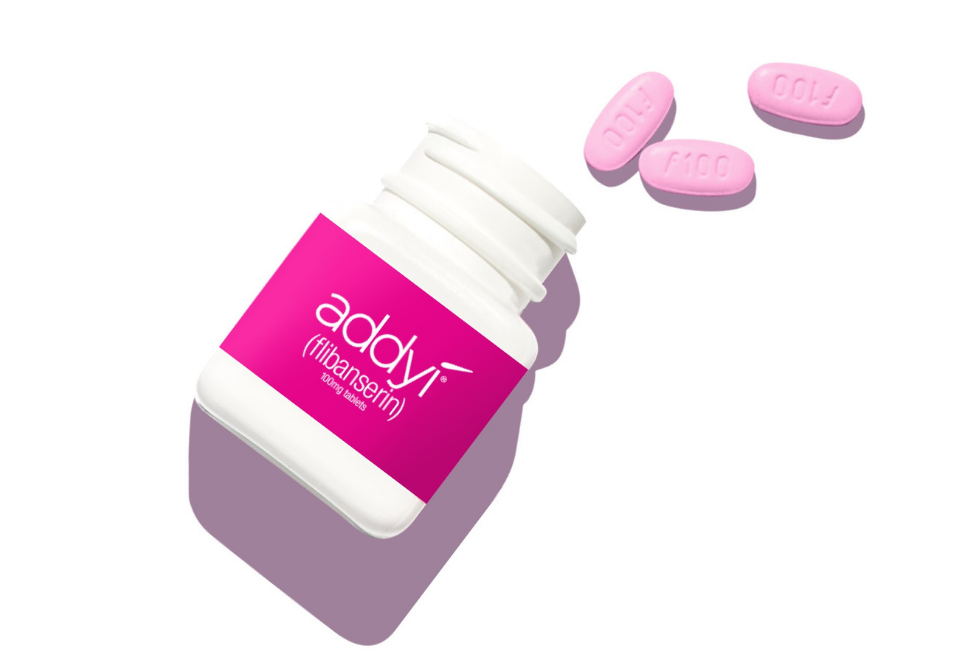
The Little Pink Pill: What Women Should Know About Addyi and Low Sexual Desire
Most people have heard of the “little blue pill.”
But fewer people know there’s also a “little pink pill”—a medication called Addyi (flibanserin) designed for certain women experiencing low sexual desire before menopause.
And if your first reaction is, “That’s not something we really talk about…”—that may be exactly why we should.
At Charleston House, we believe women’s health conversations should go far beyond annual exams and routine lab work. That includes topics many women have been conditioned to dismiss, minimize, or quietly carry alone.
Low libido is one of them.
Changes in sexual desire are incredibly common, yet many women never bring it up with a provider. Some assume it’s simply part of getting older. Others blame stress, motherhood, work, relationship dynamics, or tell themselves this is just “how life is now.”
But when something feels different, it deserves thoughtful attention.
Because sexual health is health.
First: What Is “Low Libido”?
Sexual desire naturally changes throughout life.
It can fluctuate with:
- Hormonal shifts
- Pregnancy and postpartum changes
- Stress and mental load
- Poor sleep
- Relationship stress
- Medications
- Body image changes
- Perimenopause or menopause
- Chronic medical conditions
So occasional dips in desire? Completely normal.
The bigger question becomes:
Is the change persistent, distressing, and affecting your quality of life or relationships?
When low sexual desire becomes ongoing and causes significant emotional distress, it may fall under a diagnosis called Hypoactive Sexual Desire Disorder (HSDD).
HSDD is more than simply “not being in the mood.”
It describes a persistent lack of sexual desire that feels different from your baseline and creates personal distress.
That distinction matters.
Because there’s a difference between:
- having a busy month
- being exhausted from life
- and feeling like desire has disappeared entirely
Why Libido Changes Are Rarely About Just One Thing
One of the most important things we tell patients:
Low libido is rarely caused by a single issue.
More often, it’s a combination of multiple factors.
For many women, sexual desire is deeply connected to what’s happening in both the body and the brain.
Questions we often explore include:
Are hormones playing a role?
Shifts in estrogen, progesterone, or testosterone can influence desire, arousal, vaginal comfort, and energy.
Are you sleeping well?
Poor sleep affects mood, stress resilience, and hormone regulation.
How high is your stress load?
Chronic stress keeps the nervous system in “survival mode,” which can suppress sexual desire.
Are medications contributing?
Certain antidepressants, blood pressure medications, hormonal contraceptives, and other prescriptions can affect libido.
Is intimacy painful?
Vaginal dryness, pelvic floor dysfunction, or discomfort during intercourse can understandably reduce desire.
What’s happening emotionally?
Resentment, disconnection, burnout, anxiety, and body image concerns can all influence intimacy.
This is why a quick prescription without a deeper conversation often misses the bigger picture.
So What Is Addyi?
Addyi (flibanserin) is an FDA-approved prescription medication used to treat acquired, generalized hypoactive sexual desire disorder (HSDD) in premenopausal women.
That’s a very specific group.
Let’s break that down:
Acquired
This means sexual desire was previously present and has decreased over time.
Generalized
The low desire occurs across situations—not just with one partner or in certain circumstances.
Distressing
The change causes emotional concern or distress.
Unlike medications that work by increasing blood flow, Addyi works on brain neurotransmitters.
It influences chemicals such as:
- dopamine
- norepinephrine
- serotonin
These neurotransmitters help regulate sexual desire and arousal.
In simple terms, Addyi works more on the brain’s desire pathways than on physical sexual function alone.
How Is Addyi Taken?
Addyi is taken once daily at bedtime.
Bedtime dosing is important because one of its more common side effects is sleepiness or dizziness.
It is not an “as needed” medication.
That means:
This is not something taken right before intimacy.
Instead, it works gradually over time.
Some women may notice improvement within several weeks, though it can take longer to assess benefit.
Consistency matters.
Who Might Be a Candidate?
Addyi may be worth discussing if you:
✔ Are premenopausal
✔ Previously had normal sexual desire
✔ Have experienced a persistent decline
✔ Feel bothered or distressed by the change
✔ Have already evaluated other contributing causes
But Addyi isn’t appropriate for everyone.
It may not be the best fit if low libido is primarily driven by:
- untreated depression
- severe relationship conflict
- pain during intercourse
- major hormone imbalance
- medication side effects
- uncontrolled medical conditions
This is why individualized care matters.
Potential Side Effects of Addyi
Like any medication, Addyi can have side effects.
The most commonly discussed include:
- Dizziness
- Sleepiness
- Fatigue
- Nausea
- Dry mouth
- Low blood pressure
- Feeling lightheaded
Alcohol use and certain medications may increase risks, so medication review is important before starting.
At Charleston House, safety and thoughtful prescribing matter.
We want to understand the full picture—not just symptoms in isolation.
Addyi Is One Option—Not the Only Option
This may be the most important takeaway. The little pink pill can help some women.
But it is not where every libido conversation starts. And it certainly isn’t the only solution.
Depending on what’s driving symptoms, treatment may include:
Hormone optimization
For some women, addressing estrogen or testosterone changes may help.
Vaginal health support
Dryness, irritation, or pain can dramatically affect desire.
Sleep and stress support
Sometimes the nervous system needs support before intimacy improves.
Pelvic floor therapy
This can be transformative for pain, tension, and sexual discomfort.
Medication review
Sometimes adjusting another prescription makes a meaningful difference.
Counseling or relationship support
Emotional intimacy often influences physical intimacy. Sometimes treatment is medical. Sometimes relational.
Often, it’s both.
Why These Conversations Matter
Women are often taught to prioritize everyone else’s needs first.
Children.
Partners.
Careers.
Families.
Responsibilities.
Over time, many stop paying attention to what their body is trying to communicate. But changes in libido can offer important clues about overall health.
They may reflect:
- burnout
- hormonal shifts
- chronic stress
- sleep disruption
- emotional disconnection
- physical discomfort
In other words, low desire is not always the problem.
Sometimes it’s the symptom.
At Charleston House, No Topic Is Off Limits
We know conversations around sexual health can feel vulnerable.
They can feel awkward.
Personal.
Even uncomfortable.
But they shouldn’t feel shameful.
If something feels different—whether it’s your libido, energy, mood, sleep, or sense of wellbeing—it’s worth talking about.
You don’t need to self-diagnose.
You don’t need to minimize it.
And you don’t need to figure it out alone.
At Charleston House, we create space for nuanced, judgment-free conversations about the parts of women’s health that are often overlooked.
Because feeling connected—to your body, your relationships, and your overall wellbeing—matters.
And no topic is off limits here.
Curious whether hormones, stress, medications, or something else may be contributing to changes in sexual desire?
Schedule a consultation with Charleston House to explore the full picture of your health.